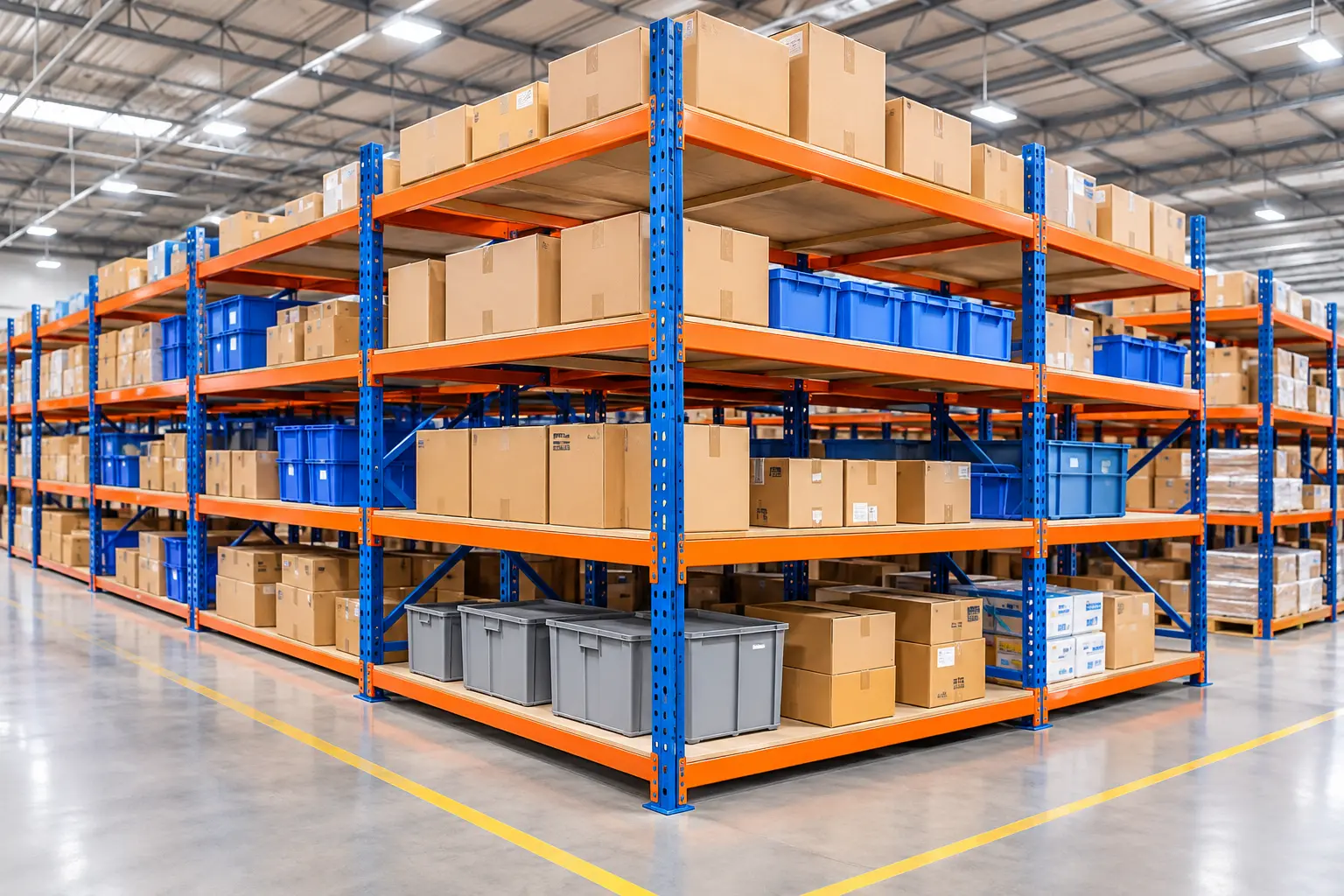
A storage system that integrates practical accessibility, structural strength, and optimal space utilization is necessary for managing warehouse goods effectively. Companies that handle cartons, machinery, tools, replacement parts, and medium-weight commodities require a dependable method for organizing their goods without causing needless traffic jams. For these common storage issues, medium-duty shelving offers an organized solution.
Industrial medium-duty shelving is made to withstand more demanding storage needs than traditional storage shelves. It is appropriate for facilities that require organized storage with easy access to particular products because of its sturdy steel construction and flexible shelf layouts.
What Makes Medium Duty Shelving a Practical Storage Investment?
Businesses that don't necessarily need heavy-duty pallet racking but need more storage strength than ordinary light-duty shelves are the target market for medium-duty shelving.
Steel frames, horizontal supports, and shelf panels made to fit various product categories are typically included in the system. Its layout can be altered based on the size of the warehouse, the properties of the materials, and the needs of operations.
The capacity to keep goods separately is one of its main benefits. It is especially helpful for warehouses that do a lot of picking because workers can easily access certain things without having to move entire pallet loads.
How Medium Duty Shelving Supports Daily Warehouse Activities
Warehouse productivity can be greatly impacted by a well-organized storage setup.
Simplified Stock Identification: Employees may identify inventory and keep correct stock records more easily when various products are assigned specific shelf positions.
Easy Material Handling: Manual picking, replenishment, and stock movement are supported by open shelving, which offers immediate access to stored goods.
Improved Vertical Storage: By having many shelf levels, companies may make better use of the height of the warehouse rather than taking up too much floor space.
Adaptable Storage Setups: Shelves that can be moved to accommodate shifting product sizes and stock levels.
Better Workplace Organization: Specific storage places help keep workspaces cleaner and more organized while lowering the number of misplaced items.
Key Design Features of Industrial Medium Duty Shelving
Businesses should take into account the characteristics that affect long-term performance while choosing industrial shelving.
Heavy-Gauge Steel Framework
The steel framework forms the primary structure of the shelving system. Its design, material thickness, connection details, and manufacturing quality influence overall stability and load-bearing performance.
Adjustable Shelf Levels
Shelf heights can be changed based on the size of the materials being stored thanks to adjustable configurations. Because of its adaptability, the system can be used by companies that oversee many product categories.
Modular Construction
As business needs change, storage areas can be expanded thanks to modular shelving solutions. A planned layout can accommodate more units without completely rebuilding the storage space.
Durable Surface Finishing
Appropriate protective coatings aid in preserving steel shelving's durability and esthetic appeal. The working environment and exposure circumstances should be taken into consideration while choosing the finishing.
Defined Load Capacity
Each configuration of shelves needs to have a suitable rated load capacity. To maintain safe storage conditions, businesses should take into account both the capacity of the entire unit and the loading of individual shelves.
Where Can Medium Duty Shelving Be Used?
Medium Duty Shelving vs Pallet Racking: Understanding the Difference
Because of its adaptability, medium-duty shelving can be used in a variety of storage settings.
- Machine parts, packaged goods, tools, and general inventories are all kept in industrial warehouses.
- Vehicle accessories, replacement parts, lubricants, and maintenance equipment are organized in automotive workshops.
- Production supplies, work materials, and minor industrial components are stored in manufacturing units.
- Spare Parts Departments: Product categories and identification systems are used to arrange various parts.
- Cartons, products, and frequently accessed inventory are managed in commercial storage facilities.
- Distribution centers are places where goods are organized for picking, sorting, and shipping.
have a variety of applications, but they play important roles in warehouse management.
Medium-duty shelving is often advised for separately stored items, cartons, tools, and products that require regular manual access.
Pallet racking is primarily utilized for palletized commodities and is often used with forklifts or other mechanical handling equipment.
The optimal choice is influenced by factors such as product weight, storage capacity, handling methods, and inventory movement. Certain facilities can provide separate storage spaces for different products by combining pallet racking and shelving.
Common Mistakes to Avoid When Installing Medium Duty Shelving
Workplace safety and operational effectiveness can both be impacted by poor storage design. When implementing new shelf systems, businesses should steer clear of a few typical blunders.
- choosing shelves without figuring out the necessary load capacity and product weight.
- deciding on shelf depth and spacing without taking product measurements into account.
- creating aisles that are too small to allow for material handling and personnel mobility.
- exceeding the ratings for each particular shelf level.
- installing shelves without adhering to the assembly and anchoring specifications provided by the manufacturer.
- neglecting to routinely check shelves for structural deformation, corrosion, or weak connections.
Expert layout design and proper installation contribute to the shelving system's intended functionality.
Choosing the Right Medium Duty Shelving for Your Business
Storage needs vary from warehouse to warehouse. While a production plant could need broader storage levels for heavier components, a spare parts warehouse can need many smaller compartments.
Examine your available floor area, inventory characteristics, necessary load capacities, picking frequency, and future development plans before making an investment in a shelf system.
A well-thought-out storage system should have enough space and enable workers to retrieve goods effectively and safely..
Conclusion
Storage needs vary from warehouse to warehouse. While a production plant could need wider storage levels for heavier components, a spare parts warehouse might need many smaller compartments.
Examine your available floor area, inventory characteristics, necessary load capacities, picking frequency, and future development plans before making an investment in a shelving system.
A well-thought-out storage plan should have enough space and enable workers to retrieve goods effectively and safely.